Why Athletes Can't Do Without Carbohydrates
- Herzog Medical
Carbohydrates haven't always had the best reputation in recent years. In my practice, I regularly notice that athletes deliberately eat fewer carbohydrates or even try to avoid them as much as possible. This is often due to messages about low-carb diets, weight loss, or metabolic health.
However, what may be sensible in one situation is absolutely not necessarily so for an athlete.
When you exercise regularly and intensely, want to have enough energy during your workout, and recover well afterward, carbohydrates play a crucial role. Therefore, it's not about whether carbohydrates are good or bad. It's about how much you need, when you consume them, and what your athletic goal is.
What exactly are carbohydrates?
Carbohydrates are an important energy source for our bodies. In our diet, we find them as starch and sugars, among other things.
Starch is found in, for example:
- Potatoes
- Bread
- Rice
- Pasta
- Grain products
Sugars are found in fruit, dairy, jam, and, of course, regular sugar.
After eating, digestible carbohydrates are largely broken down into glucose. This glucose then enters the bloodstream and can be used directly as an energy source.
What you don't immediately need, your body can store asglycogenin the muscles and liver. And it is precisely this reserve that is interesting for athletes.
Why are carbohydrates important for athletes?
Carbohydrates are a relatively quickly available energy source.
One gram of carbohydrates provides approximately four kilocalories of energy. Furthermore, during more intensive efforts, the body can make energy from carbohydrates available faster than energy from fat.
This is important when you are, for example, going to:
- Running
- Cycling
- Doing a triathlon
- Interval training
- Practicing an intensive team sport
- Performing a long endurance training
Your muscles can use glucose directly for energy. In addition, they have their own glycogen reserve that can be called upon during exertion.
You can compare this glycogen reserve a bit to an energy reserve you carry with you during exercise.
What happens if that reserve decreases?
During prolonged exertion, the amount of stored glycogen gradually decreases. How heavily you rely on it depends, among other things, on the duration and intensity of your effort.
If the availability of carbohydrates becomes too low, it can become increasingly difficult to maintain the same intensity.
Endurance athletes may be familiar with the phenomenon of 'hitting the wall'. Your legs no longer want to cooperate, your pace drops, and every kilometer suddenly seems to require much more effort.
Especially during long and intensive efforts, it is therefore important to think about your carbohydrate intake in advance.
How many carbohydrates do you need as an athlete?
There is no universal answer to this question.
The needs of someone who runs gently for half an hour twice a week are completely different from those of someone training for a marathon or triathlon.
In my practice, I therefore look at, among other things:
- Training duration
- Training intensity
- Training frequency
- The timing of the training
- Body composition
- Personal goals
- Recovery between training sessions
Timing is also important. On a rest day, your eating pattern doesn't need to look exactly the same as on a day when a heavy endurance training is scheduled.
Your nutrition should therefore adapt to what you demand from your body.
My own practical test: a half triathlon in France
As a sports dietitian, I don't just advise other athletes. I am actively involved in triathlon myself and therefore know from my own experience what a difference a good nutrition plan can make.
I recently completed my first half triathlon in scorching hot France.
My finish time: 5 hours and 44 minutes, with which I finished as the first woman in my age category.
Under such circumstances, a good performance is truly not just about how hard you've trained.
My nutrition plan was determined beforehand, and I consistently adhered to it during the race. Carbohydrates and fluids were central to this. Due to the extreme heat, I also gratefully made use of every opportunity to cool down under the water sprinklers.
Without sufficient fuel, my body simply would not have been able to sustain that effort in the same way.
For me, that is a good example of something I often try to convey to athletes in my practice: don't just train your body, but also train your nutrition strategy.
Carbohydrates are also important for recovery
The focus is often on what you eat before and during exercise. But nutrition after a workout is at least as interesting.
After strenuous exercise, your glycogen stores are partially depleted. Carbohydrates help replenish these stores. Proteins also provide the amino acids needed for the recovery and build-up of muscle tissue.
Especially if you want to train again the next day, this recovery is important.
At Herzog, we look at the same principle from a different expertise. A good sports performance does not only arise during training. What you do before and after also determines how well your body can cope with stress.
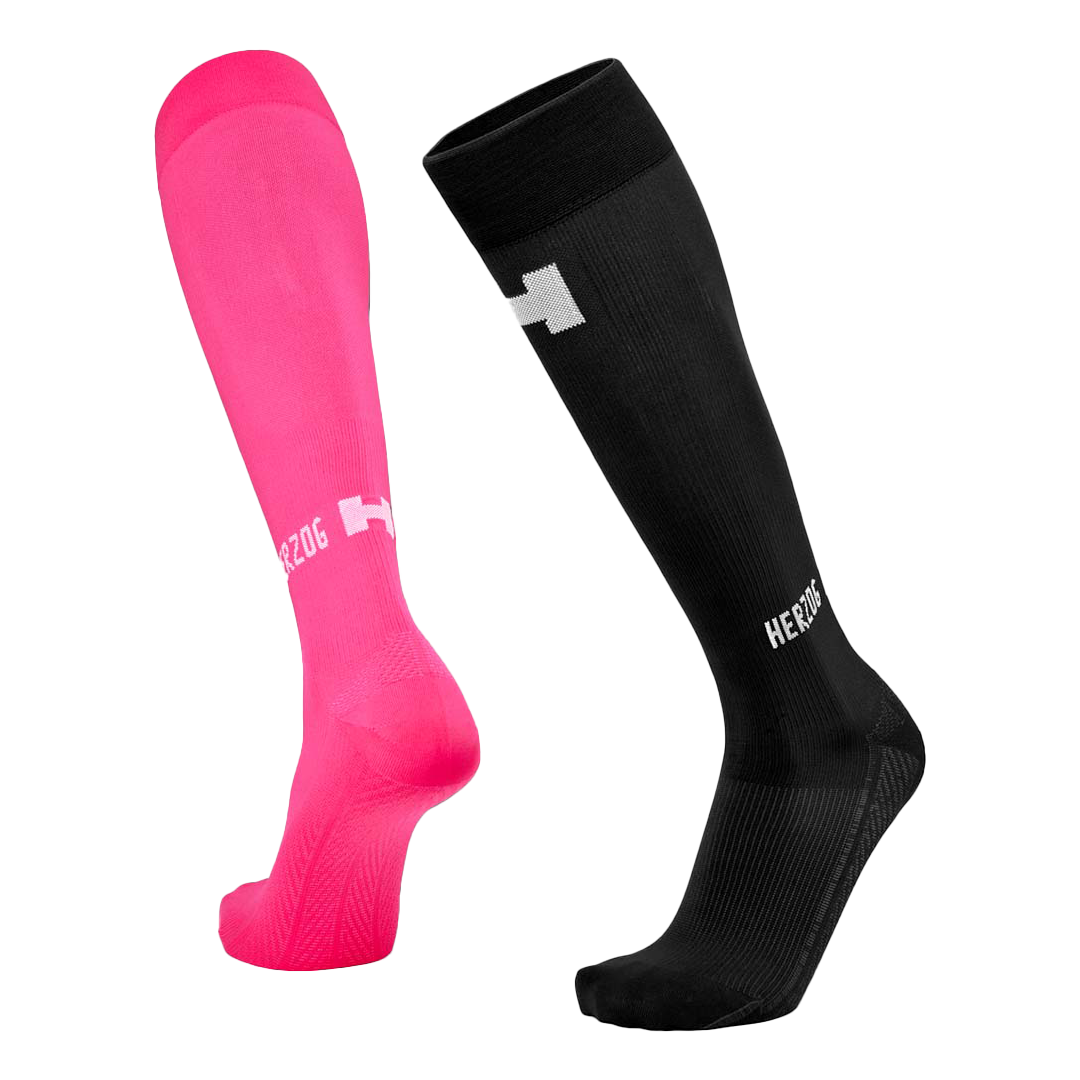
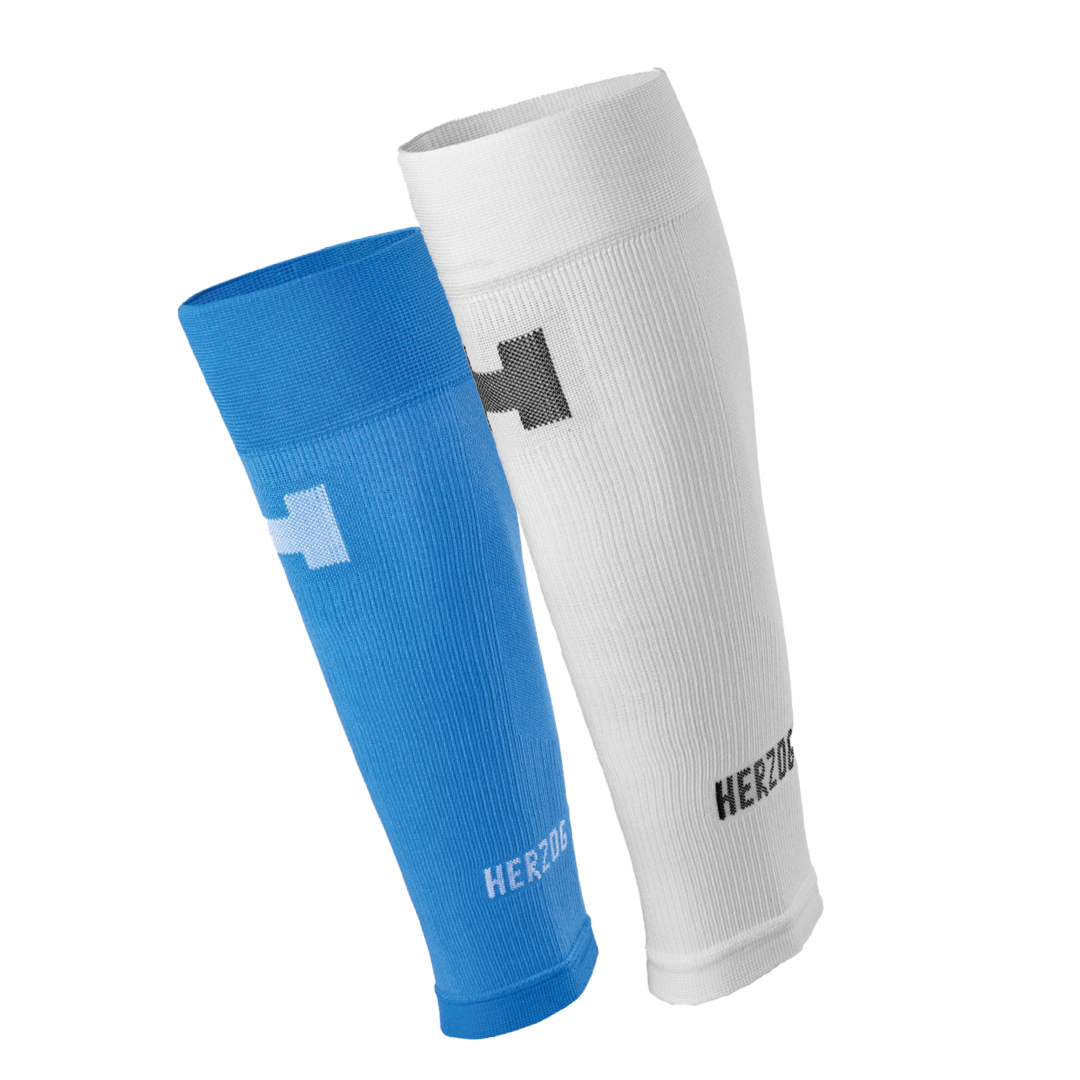
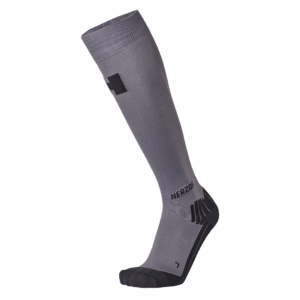
Nutrition, hydration, sleep, training structure, and recovery are all part of that overall picture. Compression can also be part of this. For example, athletes use Herzog compression during and after exercise to support muscles and blood circulation.
A compression stocking certainly cannot compensate for a bad nutrition plan. Just as perfect sports nutrition cannot solve insufficient recovery or an incorrect training schedule. It is precisely the combination that makes the difference.
But what about low-carb or ketogenic eating?
Does this mean I never advise limiting carbohydrates? Certainly not.
In my dietitian practice, I advise athletes to temporarily eat very low-carb or ketogenic in specific situations.
In a ketogenic diet, carbohydrate intake is severely restricted, often to about 30 to 50 grams per day. The body then starts to use fats more as an energy source.
However, this requires adaptation from the body and is certainly not suitable or practically feasible for every athlete.
In specific situations, I can use such a strategy to work on metabolic flexibility: the body's ability to utilize different energy sources.
I sometimes call that playing with carbohydrates.
However, the important word there is: strategy.
Eliminating carbohydrates from your diet without a clear reason is very different from consciously adjusting the amount and timing of carbohydrates to a training goal under supervision.
Do you seriously want to experiment with a ketogenic or very low-carb diet while exercising intensely? If so, preferably do it under the guidance of a sports dietitian or other qualified nutrition professional.
Look at what your body needs to perform
The discussion about carbohydrates is sometimes too black and white.
Carbohydrates are not automatically fattening. Nor are they automatically necessary in the same amount for everyone.
For an athlete, the relevant question is: what do I demand of my body today and what fuel is appropriate?
A quiet recovery day places different demands than an interval training. And a five-kilometer run requires something different from your nutritional strategy than a half-ironman.
Therefore, good sports nutrition should always align with the person, the training, and the goal.
For most active athletes, carbohydrates are an important fuel. They provide readily available energy, help maintain glycogen stores, and also play a role in replen replenishing them after exercise.
That doesn't mean every athlete should eat unlimited carbohydrates. The quantity and timing must match your training load and goals.
But to completely ban them from your diet out of fear? For many athletes, that is precisely not wise.
Consider what you demand of your body. Ensure sufficient fuel before and during strenuous efforts and then give your body what it needs to recover.
Because better performance doesn't just start with good training. It also starts with good eating and good recovery.
Carlien Harms
Dietitian, sports dietitian, and lifestyle coach
Voedingsadviesgroep Utrecht
Carlien is a former top athlete and Dutch champion in the 10-kilometer run. Today, she is active in triathlon.
Relevant blogs
6 Effective tips to prevent and relieve shin splints
Prevent and alleviate shin splints with 6 practical tips for runners. Less pain, faster recovery, and better training.
Treating Whiplash: 3-Phase Recovery with Compression and Cold Therapy
Recovering from a calf strain? Discover the 3 recovery phases and how compression and cold therapy can contribute to optimal and responsible recovery.
All about calf problems: causes, symptoms, and what you can do about them
Suffering from calf complaints? Read all about possible causes, common symptoms, recovery, and what you can do to prevent calf complaints.