Harald Herzog on compression in sports

In conversation with Harald Herzog, the founder of compression socks in the sports world

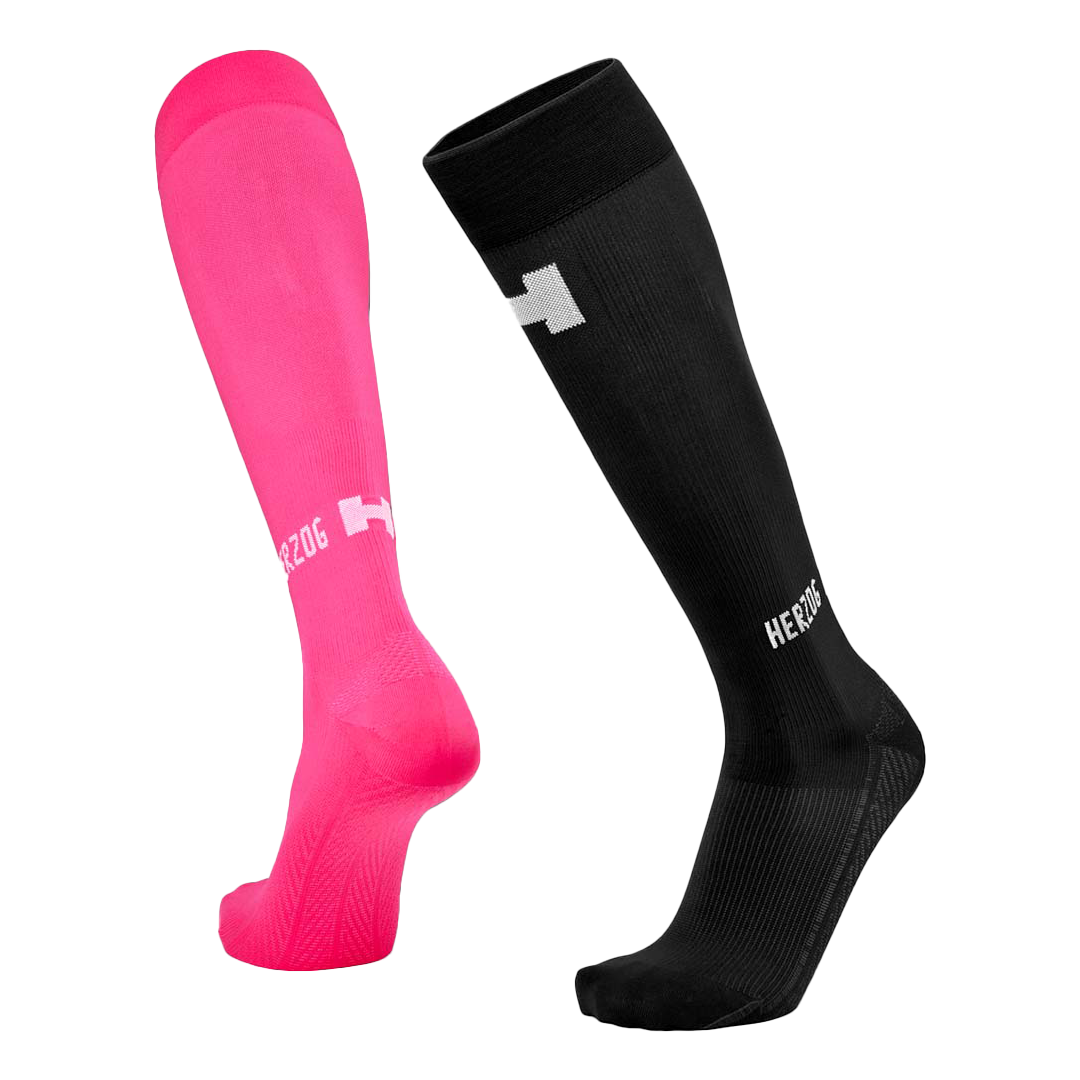
Compression socks are now indispensable in the running world. This is not only because sports compression socks are now available in all sorts of colours to match your outfit, but mainly because more and more runners are discovering how beneficial they are. The idea for sports compression socks all started with Harald Herzog. Harald was a professional athlete (cross-country skiing) in the late 70s and is now a market leader in sports compression socks. In this interview, he talks about how he came up with the idea to develop sports compression socks, the benefits of wearing sports compression socks, and what to look for when buying them.

How did you get into compression socks?

“As a result of intensive exercise, I suffered a lot from my calves and Achilles tendons. I went from physio to physio, but nothing helped. You recover quickly from such a calf injury, but it kept 'flaring up again,' according to Harald. Until at one point, my lower legs were firmly taped, and I immediately felt that this really helped. After my sports career, I started working for a large medical company that sold support stockings, formally Therapeutic Elastic Stockings (TES), for medical purposes. I immediately saw a connection between the tight taping of my calf and wearing compression socks. That's why I started experimenting with wearing TES in various compression levels while running, and I quickly noticed that a certain compression level finally helped me prevent injuries.

So in the 1980s, I was the first to run with compression socks, at that time still skin-coloured, with a thick seam vertically over my calf. Back then, I thought I looked ridiculous, so I wore long pants even in 30-degree weather to hide the socks. Eventually, in the late nineties, I launched Sports Compression Socks. In the beginning, it was mainly top athletes who wore the socks, but interest quickly grew, and now more and more athletes of every level wear our compression socks.”
Side Image

What benefits do the stockings have besides healing injuries?

“Many people think that you should only wear compression stockings to prevent injuries, but the stockings can also be used to improve performance and to recover faster from exertion. But many physiotherapists now also use our stockings to treat injuries. Especially the latter is an important function for runners. With every step when running, 3 to 4 times the body weight is absorbed. Every step is therefore a strain on your body. The stockings then function more or less like the bandage I used to wear to keep the calf muscles firmly together. The shocking and vibrating of the muscle mass of the lower leg with every step is very effectively counteracted, which minimizes tensile forces on the Achilles tendon and the membrane around the shin bone. An important effect is also that muscle damage is reduced. Muscle damage sounds severe, but it is a natural consequence of intensive exercise from which you recover relatively quickly. Too much muscle damage, however, means that you retain fluid in the space between the cells, and that has a negative effect on the microcirculation, and thus on performance. Fortunately, our stockings can be worn in almost every sport.

You can see that, not only runners but also volleyball players, basketball players, handball players, korfball players, tennis players etc. wear our stockings nowadays. Unfortunately, cyclists are not (yet) allowed to wear them during official competitions, this is due to the performance-influencing effect. Our stockings are therefore more or less seen as a kind of doping. But the recovery-promoting effect is recognized by many cyclists. Our stockings are therefore worn by the professional cycling teams DSM-firmenich PostNL, Baloise Trek Lions and Cycling Team Alpecin-Deceuninck with Mathieu van der Poel. Especially after exertion and during travel by bus or plane. This recovery-promoting effect is achieved because the stockings have a decreasing pressure profile from distal to proximal (from far from the heart towards the heart) or, in other words, from the ankle to the knee. This decreasing pressure gradient ensures that the blood, containing the waste products of the combustion process, is drained faster and therefore the supply is not hindered either. The effect is improved blood circulation in the muscles.”

Side Image

Are sports compression socks only for elite athletes?

"Sports Compression socks are intended for all sports where you have to run, jump, decelerate, or quickly turn and pivot. Wearing compression socks, as I said, started mainly with elite athletes, but they are actually very useful for every recreational athlete. Recreational athletes, in particular, benefit greatly from them because they don't always pay attention to a warm-up and cool-down. Beginner, untrained athletes are extra prone to injuries and can greatly benefit from the support of our socks."

When do you wear sports compression socks?

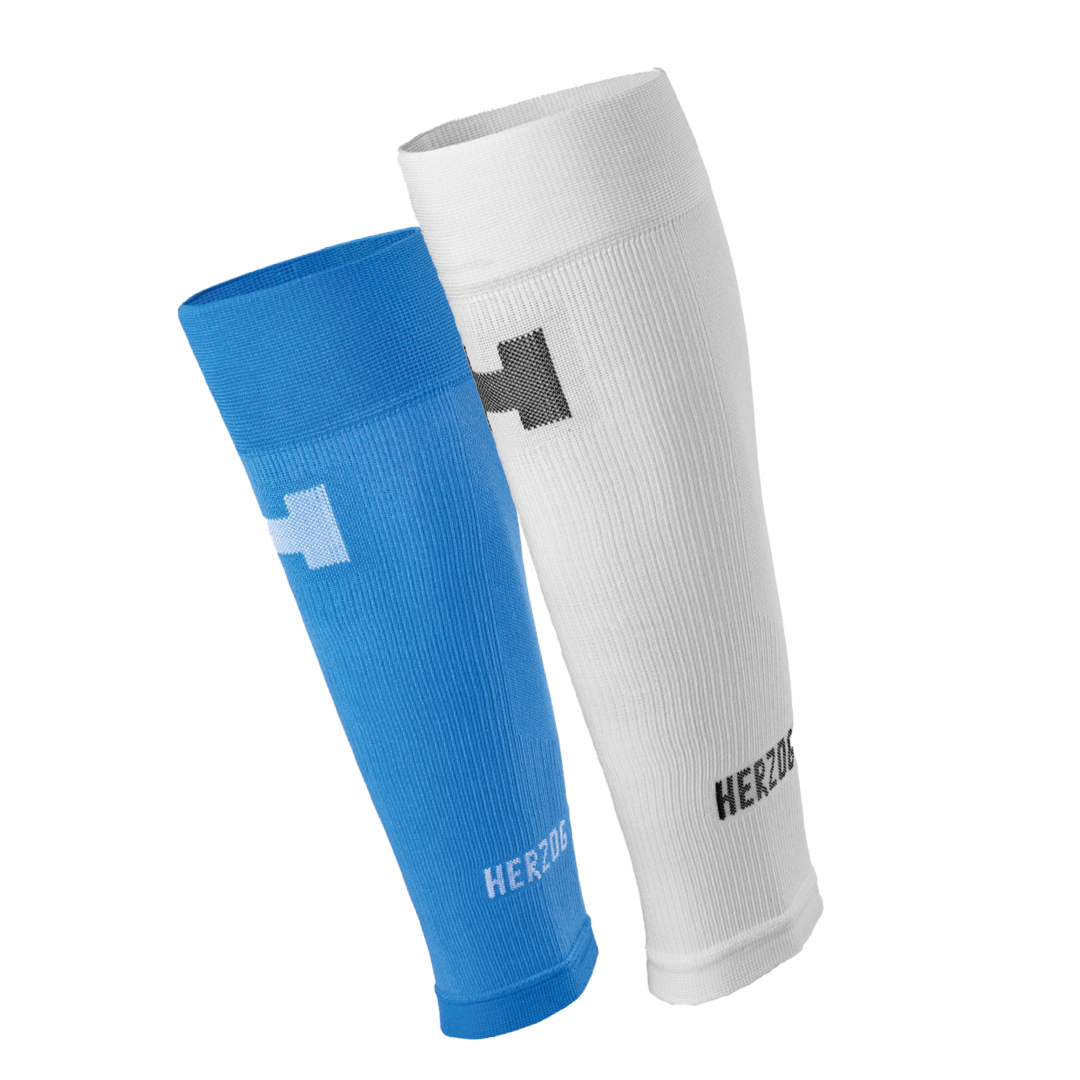
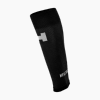
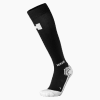
"Thetubesare compression socks without a foot section, and you wear these onlyduringthe activity. Thesockswith a foot section can be worn bothduringandaftertraining. Depending on how strenuous your training or competition was, you can keep them on for a few hours to a day after the activity for recovery."

Side Image

Are all sports compression socks with an elastic band good compression socks?

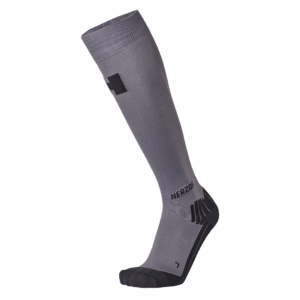
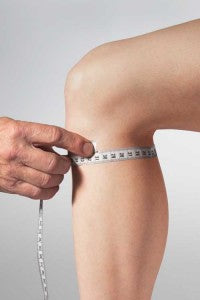
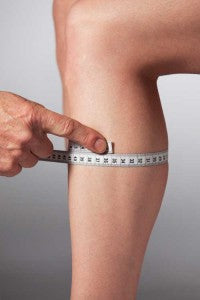
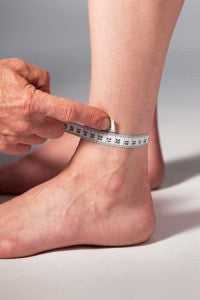
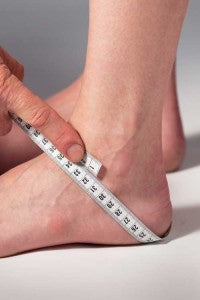
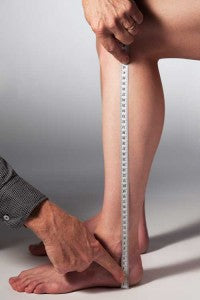
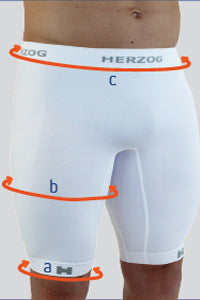
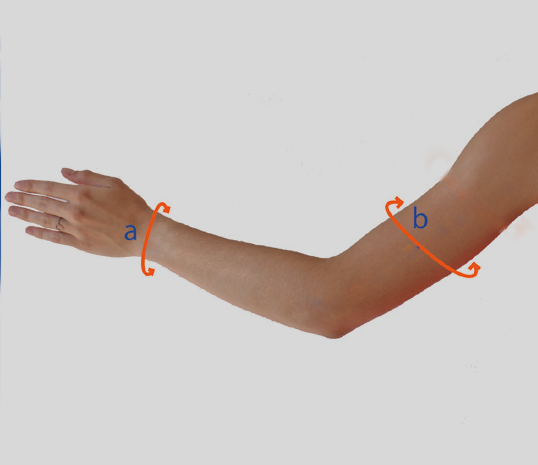
“Today, there are many different brands offering sports compression socks. Most brands simply offer their socks based on shoe size or the widest calf circumference. This is actually quite strange… I often make the following comparison: a muscular footballer with shoe size 43 has a completely different calf circumference than a lean marathon runner with the same shoe size. Both athletes can therefore never wear the same compression sock. A sizing of S, M, L and XL is therefore absolutely insufficient. With us, it is very different. Herzog's size assortment consists of no fewer than 54 ready-to-wear sizes. Herzog socks are measured at 5 points, so you can be sure that the compression optimally follows your individual leg contour. This also means that Herzog socks are a bit more difficult to put on, because the highest compression is at ankle level, but the cross-section of the sock is precisely the smallest there. It is proof of the correct amount of compression and compression gradient.”

Where can you purchase a Herzog Sports Compression Sock and how does it work?

“Herzog sports compression socks can be purchased at all running specialty stores in the Netherlands and Belgium. In the meantime, many general sports stores, such as Intersport and Sport 2000 stores, also carry Herzog socks in their assortment. In the store, your leg will be measured by the sales assistant, and based on this, the correct sock will be selected. Of course, we demonstrate how to put on the compression socks. This is very important, because this way we are sure that the effect is optimal.”

Relevant blogs

6 Effective tips to prevent and relieve shin splints

Prevent and alleviate shin splints with 6 practical tips for runners. Less pain, faster recovery, and better training.

Treating Whiplash: 3-Phase Recovery with Compression and Cold Therapy

Recovering from a calf strain? Discover the 3 recovery phases and how compression and cold therapy can contribute to optimal and responsible recovery.

All about calf problems: causes, symptoms, and what you can do about them

Suffering from calf complaints? Read all about possible causes, common symptoms, recovery, and what you can do to prevent calf complaints.