Plantar Fasciitis: symptoms, causes, and what you can do about it

Pain under the foot as soon as you get out of bed in the morning, or a stabbing pain in the heel after a run. These are often the first signs of a plantar fascia complaint, also known as plantar fasciitis. The plantar fascia is the broad band of connective tissue that runs from the heel to the toes and supports the arch of the foot. If this tissue becomes irritated, you will feel it especially during the first steps after rest.

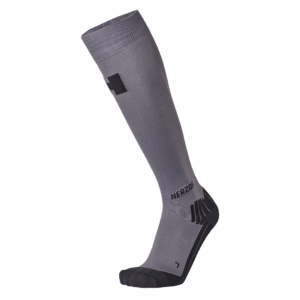
At Herzog, we regularly see people who experience pain in the sole of their foot after training or a long walk, and who are looking for support for their foot and lower leg. Herzog medical compression socks are often used as a supplement to rest and stretching exercises, as they can support blood circulation in the lower leg during recovery. This is not a miracle cure, but a practical aid in addition to the basic approach.
Side Image

What are the symptoms of plantar fasciitis?

The plantar fascia, also known as the plantar aponeurosis, is a strong band of connective tissue that runs from the heel bone to the base of the toes. This structure acts as a kind of spring that absorbs shocks when walking and keeps the arch of the foot in place. When you spend a lot of time on your feet, run on a hard surface, or make a jump in training intensity, the plantar fascia can become overloaded. Small tears in the tissue then cause irritation and inflammation, which manifests as pain under the heel or in the arch of the foot.

The most characteristic sign is a sharp, stabbing pain under the heel during the first steps in the morning or after a period of rest. Once you've taken a few steps, the pain often temporarily subsides, only to return later in the day, especially after standing for a long time or an intensive workout. Some people feel the discomfort mainly on the inside of the heel, others notice it more towards the arch of the foot. Stiffness in the sole of the foot after a period of rest is also common.

Plantar fasciitis is sometimes confused with heel spurs, a condition in which a bone spur forms on the heel as a result of prolonged overuse of the plantar fascia. The symptoms are very similar, but a heel spur is a consequence, not a cause. Especially people who runa lot or walklong distances recognize this pain, as do people who spend a lot of time on hard floors due to their work. The load on the foot is similar in all these situations, even if the cause is slightly different.

Side Image

What causes plantar fasciitis?

The most common cause of plantar fasciitis is overuse. This occurs, for example, when you rapidly increase your training volume, change surfaces, or run many miles on asphalt instead of forest trails or grass. A job that requires you to stand all day, such as in healthcare or hospitality, can also place prolonged stress on the plantar fascia. The structure then receives insufficient recovery time between periods of stress, causing small damages to accumulate before the body has a chance to repair them. Herzog frequently observes this pattern in both athletes and individuals in physically demanding professions.

Reduced flexibility of the calf muscles and Achilles tendon also plays a role. If these muscles are tight or short, they pull extra on the heel, forcing the plantar fascia to work harder to support the arch of the foot. Complaints of the Achilles tendonand the plantar fascia often occur together, especially in runners who pay little attention to stretching and mobility. Overweight and a sudden weight gain also increase pressure on the sole of the foot, as do shoes with insufficient cushioning or support.

The shape of your foot also plays a role. With a high arch or, conversely, flat feet, the way the load is distributed across the sole of the foot changes, increasing the risk of plantar fasciitis. People who do a lot of trail runningon uneven terrain also experience varying loads per step, which places extra demands on the stability of the foot. Age also plays a role, as connective tissue loses some elasticity as you get older, making it more susceptible to overuse. This also applies to people who exercise little but suddenly start walking a lot.

Products in this blog

Side Image

What can you do yourself for plantar fasciitis?

The first step for plantar fasciitis is often to temporarily reduce the load, allowing the tissue to recover. Stretching exercises for the calf and sole of the foot, for example with a towel or a tennis ball under the foot, help to reduce tension on the plantar fascia. Then, gradually build up your training volume instead of immediately returning to your old routine. Comfortable shoes with sufficient cushioning and support also make a noticeable difference in daily load for many people.

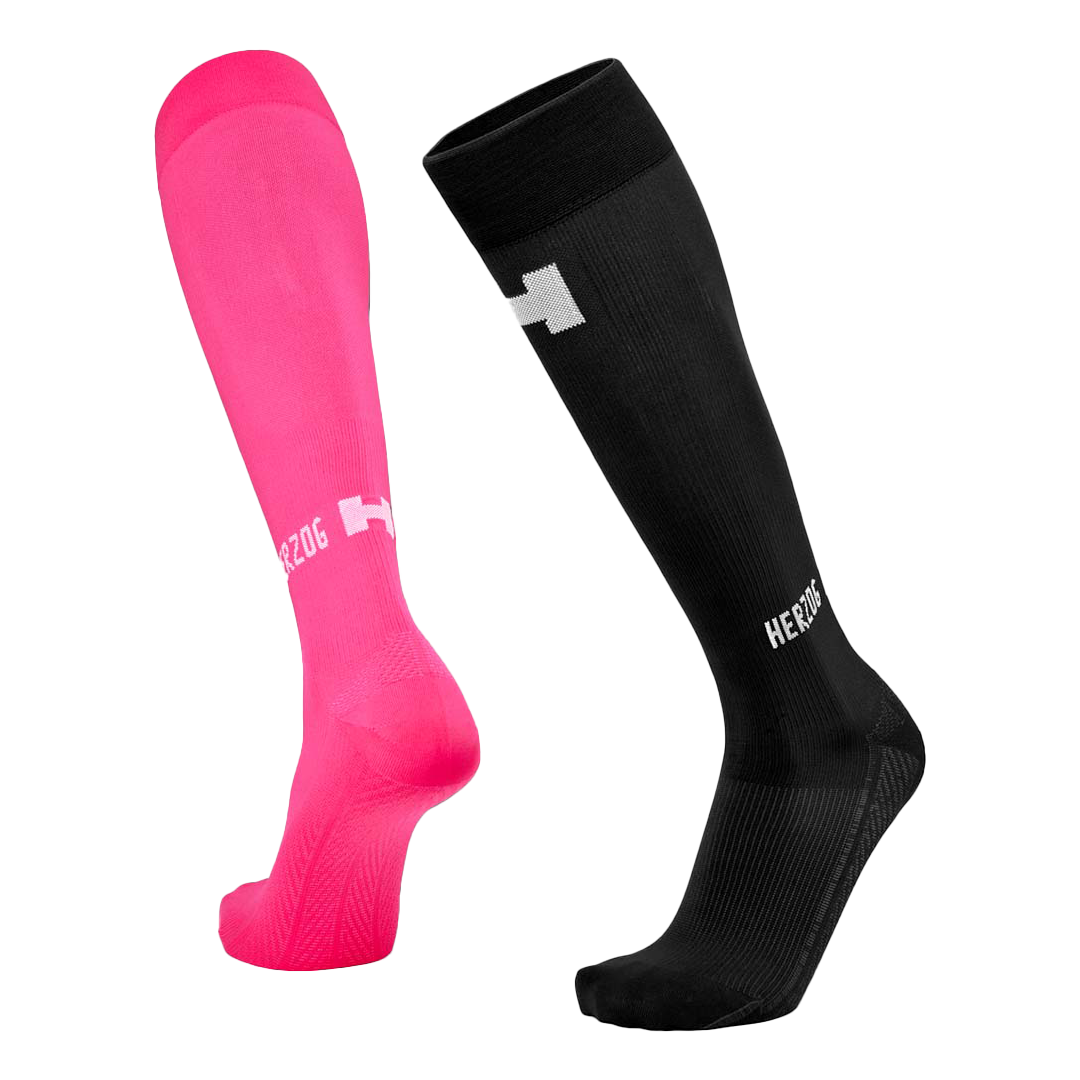
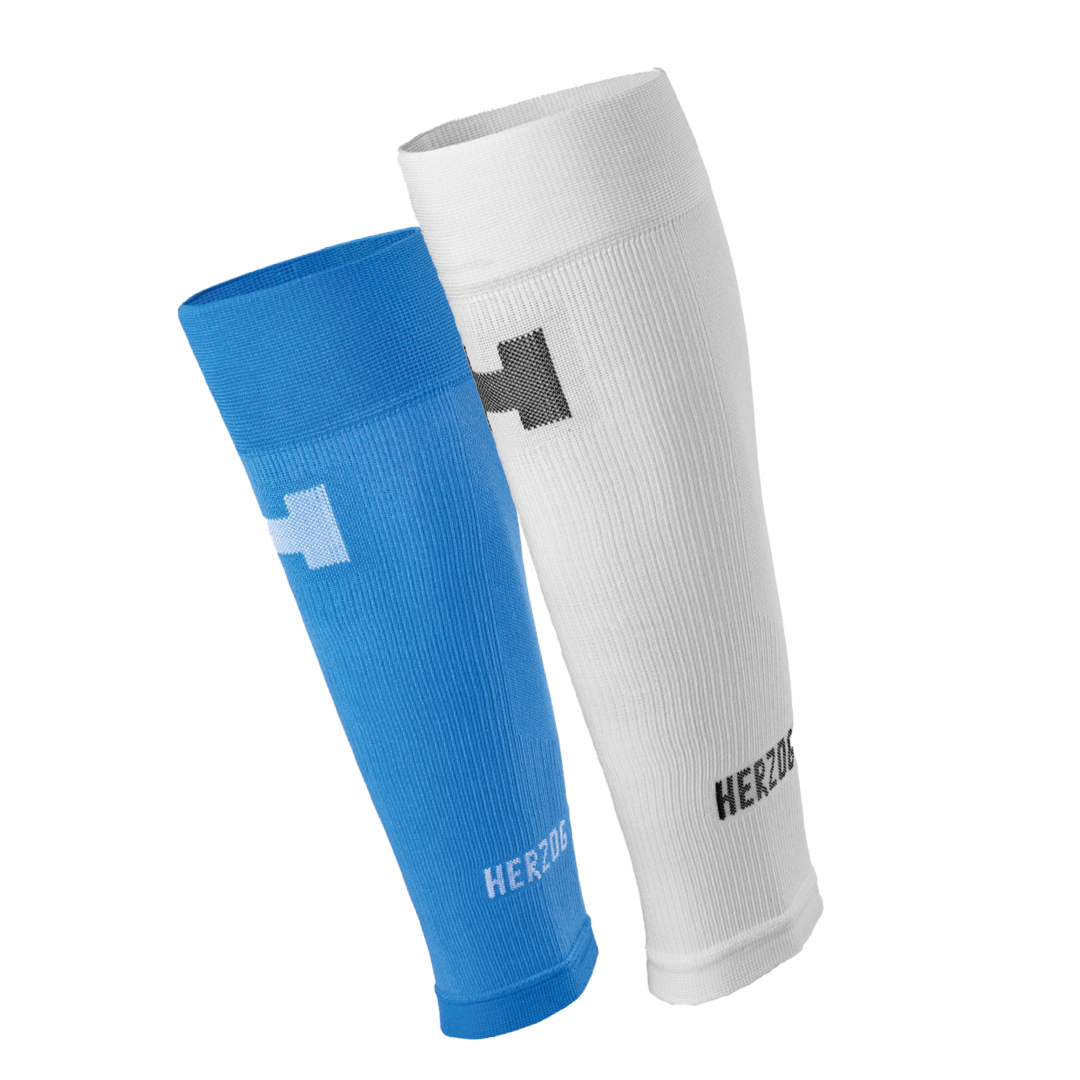
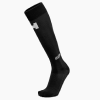
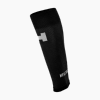
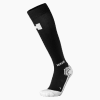
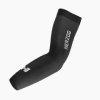
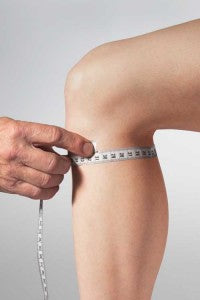
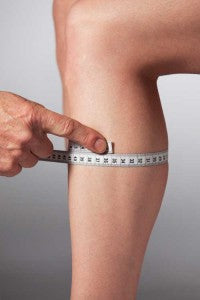
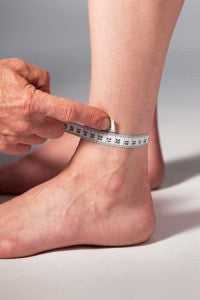
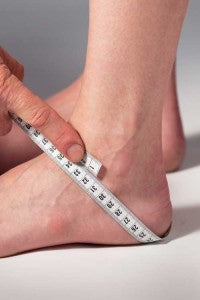
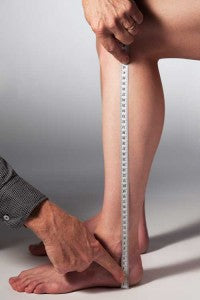
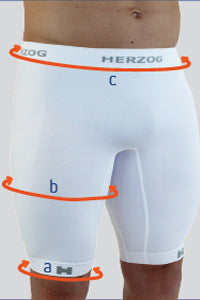
In addition to rest and stretching exercises, many people opt for support through compression. The effect of compressionlies in the controlled pressure that decreases from bottom to top, which can support blood circulation in the lower leg and foot. Herzog PRO Compression Socks and Herzog PRO Compression Tubes are developed from medical compression technology and carry an MDR quality mark, meaning they meet medical quality requirements. They are individually fitted based on six measuring points, so that the pressure distribution matches the shape of your leg and foot rather than a standard size.

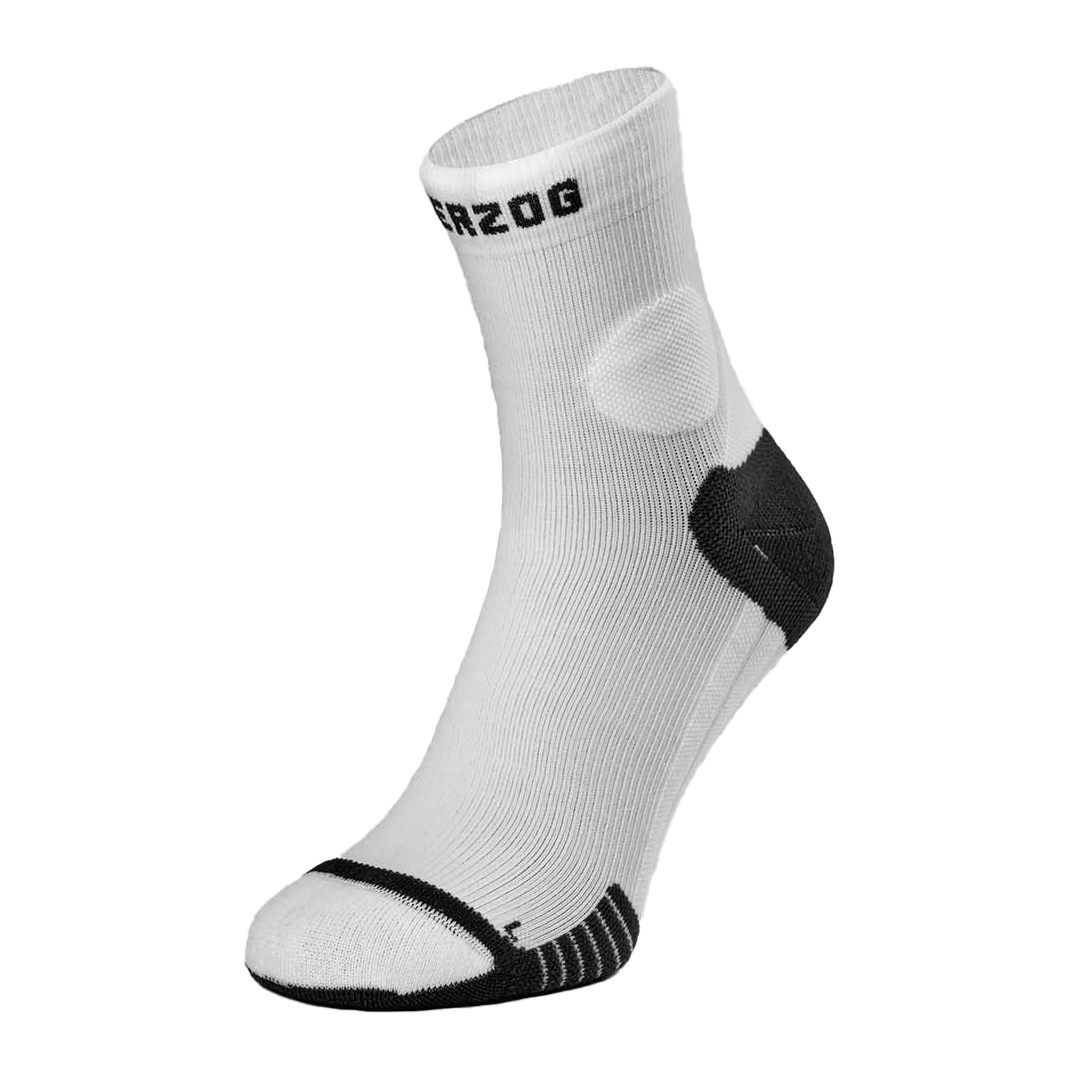
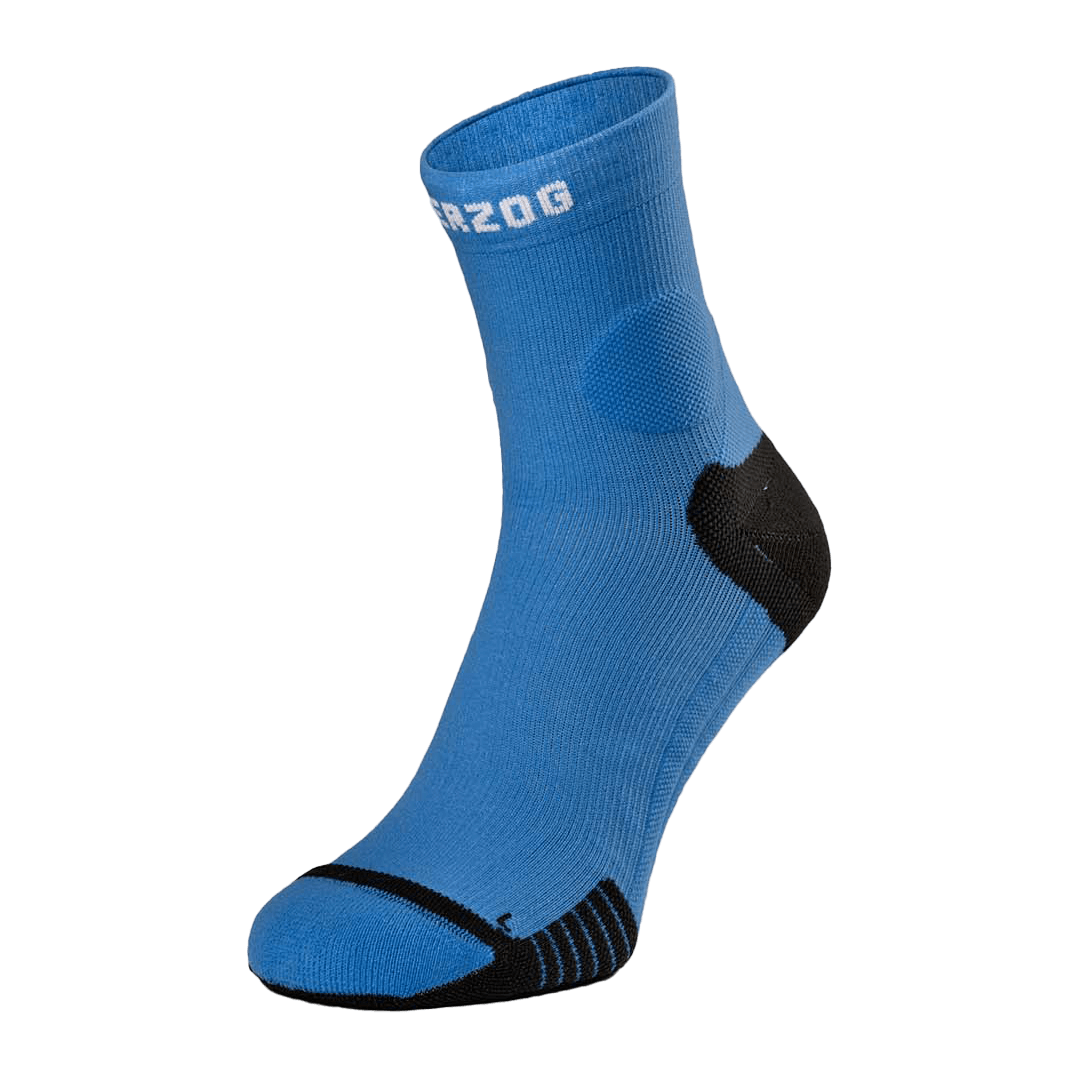
With plantar fasciitis, the irritation is not only in the lower leg, but specifically under the foot and around the heel. Therefore, the Herzog PRO Ankle Sockscan be an interesting addition for athletes seeking support during walking, running, or daily movement.

Where a compression sock primarily focuses on the lower leg, the ankle sock directly fits around the foot, ankle, and heel. The targeted compression supports the structures around the arch of the foot and ankle and provides a more stable feeling during foot roll-off.

This makes the ankle socks particularly interesting if you:

  • Feel the discomfort mainly under the heel or arch of the foot
  • Walk or stand a lot during the day
  • Want extra support around the foot and ankle during exercise
  • Do not want to wear high compression socks, but do want support around the area of discomfort

The Herzog PRO Ankle Socks have been developed from the same compression expertise as other Herzog products. The fit and pressure distribution are designed to comfortably enclose the foot without restricting freedom of movement.

For plantar fasciitis, you can therefore roughly distinguish between two types of support: the PRO Ankle Sockswhen the focus is on the foot, heel, and ankle, and the PRO Compression Socks or tubeswhen you also want to support the calf and the entire lower leg.

Frequently Asked Questions

What is the difference between plantar fasciitis and heel spur?

Plantar fasciitis is caused by irritation of the plantar fascia itself, whereas a heel spur is a bony protrusion that can develop as a result of prolonged overuse of that same plantar fascia. The symptoms are similar, but a heel spur is more of a consequence than a separate cause. If in doubt, a general practitioner or podiatrist can provide clarity through physical examination.

Can I continue running with plantar fasciitis?

Completely stopping is usually not necessary, but it is advisable to temporarily adjust your load and not train through the pain. Choose a softer surface, gradually increase your mileage, and allow the tissue sufficient recovery time between training sessions. If the pain persists despite adjustments, it is wise to consult an expert.

Do compression socks help with plantar fasciitis?

Compression socks do not treat the plantar fascia itself, but many people find that controlled pressure on the lower leg and foot feels comfortable during recovery after a workout. They are often used as a supplement to rest, stretching exercises, and gradual build-up, not as a replacement for them.

Relevant blogs

6 Effective tips to prevent and relieve shin splints

Prevent and alleviate shin splints with 6 practical tips for runners. Less pain, faster recovery, and better training.

Treating Whiplash: 3-Phase Recovery with Compression and Cold Therapy

Recovering from a calf strain? Discover the 3 recovery phases and how compression and cold therapy can contribute to optimal and responsible recovery.

All about calf problems: causes, symptoms, and what you can do about them

Suffering from calf complaints? Read all about possible causes, common symptoms, recovery, and what you can do to prevent calf complaints.